Partielo | Créer ta fiche de révision en ligne rapidement
Lycée
Première

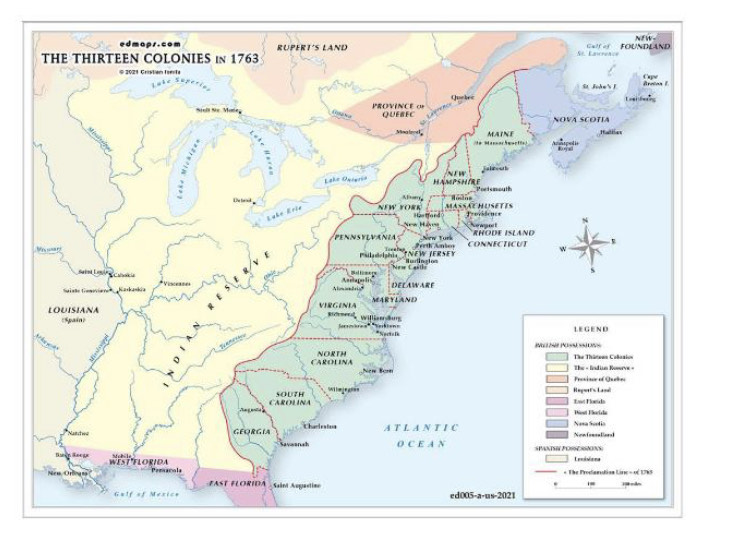
The American Revolution(1763/1787) or how the thirteen colonies became the United States of America

Politics :

-colonies are dependent to the British

Crown (doc.

2)

—> they are governed by a governor usually appointed by

King (doc. 4)

—> the legislative power proceeds from Parliament but the colonists have some political independence = the assembly in each colony is elected on a democratic basis; and we can notice than more men can vote in the colonies than in England: about 60% VS about 20%) (doc. 4)

-the colonists are politicized = they talk about politics

Définition

A colony
A country or a area under political control of another country and occupied by settlers of this country
A mother country
A country in relation to its colonies (Great Britain = mother country of the Thirteen colonies

Inhabitants :

-diversity of inhabitants

—› colonists from

European origin (English,

Scots,Germans, Dutch, Irish, Swiss, French, some Africans..)

Voir DIAPO"Ethnic settlement patterns"

—> slaves (from Africa)

—› Indians (Creeks, for example)

-› voir carte des Natives

Economic activities and wealth :

-colonies have a striving economy and are considered wealthy by the Crown 

= Eighteenth-century colonial merchants and planters created and inherited wealth so vast that their predecessors scarcely could have comprehended it. (doc. 1)

--› different activities (tobacco, fish, shipyards, commercial trade) (doc. 5)

--> wealthy ports and city (Philadelphia, Boston) (doc.5,6)

Religion :

-religious diversity

-> Catholics

-> Anglicans

-> Other protestant sects:

Presbyterians, Quakers..

-> Jews...

A retenir :

CONCLUSION:

-from a political point of view, the 13 Colonies are dependent, but they elect their own assemblies (even if colonial laws proceed from the British law) and the right to vote is more widespread than in England and the colonists are politicized

-> The British government's position was that Parliament's authority was unlimited, while the American position was that colonial legislatures were coequal with Parliament (colonists considered that, as British subject, they had the right to be represented).

-from a social point of view : a wide diversity of inhabitants and a religious diversity (more diverse than in Great Britain)

-from a economic point of view: the colonies are wealthy thanks to commercial trade with the Antilles and with Europe

A retenir :

two opposite sides


side 1: americans, british citizens from the Thirteen Colonies Colonist Patriot

Organized in militia

Side 2 British Troops (the Red Coats) Professional Soldiers

Regular Army

A retenir :

1607 1st colony

1732 last colony

Virginia(1607)

Massachussets(1620)

New Hampshire(1623)

Maryland(1634)

Connecticut( around 1635)

Rhode Island(1636)

Delaware(1638)

19 april 1775 American Revolutionary War at Lexington


Lycée
Première

The American Revolution(1763/1787) or how the thirteen colonies became the United States of America

Politics :

-colonies are dependent to the British

Crown (doc.

2)

—> they are governed by a governor usually appointed by

King (doc. 4)

—> the legislative power proceeds from Parliament but the colonists have some political independence = the assembly in each colony is elected on a democratic basis; and we can notice than more men can vote in the colonies than in England: about 60% VS about 20%) (doc. 4)

-the colonists are politicized = they talk about politics

Définition

A colony
A country or a area under political control of another country and occupied by settlers of this country
A mother country
A country in relation to its colonies (Great Britain = mother country of the Thirteen colonies

Inhabitants :

-diversity of inhabitants

—› colonists from

European origin (English,

Scots,Germans, Dutch, Irish, Swiss, French, some Africans..)

Voir DIAPO"Ethnic settlement patterns"

—> slaves (from Africa)

—› Indians (Creeks, for example)

-› voir carte des Natives

Economic activities and wealth :

-colonies have a striving economy and are considered wealthy by the Crown 

= Eighteenth-century colonial merchants and planters created and inherited wealth so vast that their predecessors scarcely could have comprehended it. (doc. 1)

--› different activities (tobacco, fish, shipyards, commercial trade) (doc. 5)

--> wealthy ports and city (Philadelphia, Boston) (doc.5,6)

Religion :

-religious diversity

-> Catholics

-> Anglicans

-> Other protestant sects:

Presbyterians, Quakers..

-> Jews...
A retenir :

CONCLUSION:

-from a political point of view, the 13 Colonies are dependent, but they elect their own assemblies (even if colonial laws proceed from the British law) and the right to vote is more widespread than in England and the colonists are politicized

-> The British government's position was that Parliament's authority was unlimited, while the American position was that colonial legislatures were coequal with Parliament (colonists considered that, as British subject, they had the right to be represented).

-from a social point of view : a wide diversity of inhabitants and a religious diversity (more diverse than in Great Britain)

-from a economic point of view: the colonies are wealthy thanks to commercial trade with the Antilles and with Europe

A retenir :

two opposite sides


side 1: americans, british citizens from the Thirteen Colonies Colonist Patriot

Organized in militia

Side 2 British Troops (the Red Coats) Professional Soldiers

Regular Army

A retenir :

1607 1st colony

1732 last colony

Virginia(1607)

Massachussets(1620)

New Hampshire(1623)

Maryland(1634)

Connecticut( around 1635)

Rhode Island(1636)

Delaware(1638)

19 april 1775 American Revolutionary War at Lexington