
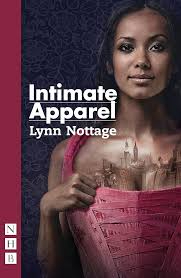
A play written by Lynn Nottage, exploring themes of love, identity and the quest for self through the prism of the life of an African-American seamstress in the early 20th century.
Historical and social context
The story of 'Intimate Apparel' is set in 1905 in New York, a time when the city is a vibrant melting pot of immigrants and diverse cultures. Opportunities for women, particularly black women, are very limited. This play explores the social and economic realities facing these women, highlighting their struggles and resiliencies. Jim Crow laws, although mainly associated with the South, also had significant effects on African-Americans living in the North, limiting their employment opportunities and integration into society.
Main characters
Esther Mills: She's the play's protagonist, a talented seamstress specializing in made-to-measure lingerie. Her quest for independence and love is at the heart of the story. She dreams of owning her own dressmaking salon, but is faced with daunting personal and societal challenges.
Mr. Marks:He is a Romanian Jewish fabric merchant who shares a special, unspoken bond with Esther. Mr. Marks is gentle, thoughtful, and kind, with a reserved nature.
George Armstrong: An immigrant worker from the West Indies who begins to correspond with Esther. Their relationship becomes central to the play, revealing complex complications around identity and desire.
Mayme: A musician and prostitute, she shares a paradoxical friendship with Esther that is marked by their contrasting social status and life choices.
Mrs. Van Buren: A wealthy white upper-class woman who becomes Esther's client and confidante,
Mrs Dickson:She is the boardinghouse owner and a maternal figure to Esther. A widow who runs a respectable establishment. She serves as a confidante and advisor to Esther, often giving her practical advice and encouraging her to be cautious in love and business. Despite her warmth, Mrs. Dickson is also pragmatic, highlighting the complex survival strategies that women like her needed to navigate racial and social challenges.
Relationships
Esther and George: George and Esther’s relationship starts with a sense of hope and romance but becomes increasingly strained and disillusioned. Esther connects with George through letters while he is working on the Panama Canal, and they build a fantasy of love. However, after their marriage, Esther's dreams clash with the reality of George’s personality. George, who had been drawn to Esther’s financial independence, becomes manipulative and insensitive, undermining Esther’s self-worth and financial stability.
Esther and Mr. Marks: Esther shares a gentle, almost sacred connection with Mr. Marks, a Jewish fabric merchant, bound by a shared love for fine fabrics. Cultural and religious barriers
(arranged engagement) however, prevent them from pursuing a romance, leaving their feelings unspoken, highlighting the tension between duty and desire that runs throughout the play.
Esther and Mrs. Van Buren: Mrs. Van Buren, a wealthy white client, forms a close friendship with Esther to fill the void of her own unhappy marriage. While genuine, their friendship is limited by racial and social divides of the time. She frequently shares intimate details about her personal life with Esther, and this closeness eventually leads her to fall in love with her.
Esther and Mayme: Esther finds companionship in Mayme, her bestfriend with whom she bonds and talks about almost everything (George, work, dreams...) but their friendship is strained when Mayme becomes involved with George (sexual intercourse), bringing betrayal and testing their bond.
Themes
Quest for identity: Esther struggles to find her place in a society that does not value black women, seeking to build a life with meaning and honor in the midst of social pressures.
Love and loneliness: the correspondence between Esther and George offers a poignant reflection on the hope and illusion of love, particularly at a time when communication was slow and symbolic.
Clothing as metaphor: Tailor-made clothes become a symbol of how characters present themselves and are perceived in society. They also represent the potential for personal transformation and revelation.
Stage directions
In Intimate Apparel, Lynn Nottage’s stage directions enhance character depth and emotion through subtle, intentional gestures. For instance, Mr. Marks handles fabrics gently when interacting with Esther, symbolizing their restrained affection. The use of "pool of lights" and pauses like "a moment," intensifies the play's emotional tone. The "pool of light" often isolates characters, spotlighting their vulnerabilities, like when Esther reflects alone, emphasizing her solitude.
Nottage frequently uses "a moment" to allow silent in conversations, deepening emotional tension. For example, when Esther and Mr. Marks share a "moment" over fabrics, the silence conveys their unspoken affection.
Symbols & Motifs
Crazy quilt: fabric representing G&E relationship, material love for the distance that separates them
Smoking Jacket: Generous gift from E to G, shows affection; +sacrifice=only gift she can afford to give to someone (she offers him all she has). It becomes a symbol of her unfulfilled dreams and George’s betrayal, showing how her expectations unravel.(=démeler)
Ragtime: announces Mayme's arrival on t (he scene (or in the play), it also sets the atmosphere
("slow seductive rag" p65). Mayme’s rags symbolize independence and the expressive power of art within the play, underscoring themes of freedom and cultural identity.
Missing button: On Mr. Marks’s coat, the missing button symbolizes the possibility of a relationship between him and Esther; once he sews it back on, it signifies that a romantic relationship between them is no longer possible. It
Quotes
"For a dollar they think they own you"-Mayme (p23)
"Allows herself to get lost in the fantasy"-Esther (p27)
"And it's in his weakness that he'll find his strength"-Mayme (p30)
"This man in Panama he's paper"-Mrs Dikson (p33)
"This civilized creature of society"-Mrs VB (p35)
"How yuh know you pretty from the looking glass"-George (p57)
"You got a good arm George Armstrong"-Esther (p59)
"I just tired of comin' home to put me hand in yuh pocket"-George (p59)
"But I fear my love belongs someplace else"-Esther (p64)
"You are the worst sort of scavenger"-Esther (p68)
"I ain't really Mrs Amstrong"-Esther (p73)
"I knew who i was back then"-Esther (p73)
Reception and Impact of the Work
Since its premiere, 'Intimate Apparel' has been hailed for its poignant and nuanced exploration of themes of race, gender and identity. The play has garnered widespread recognition for its author, Lynn Nottage, celebrated for her ability to make visible the stories of those invisible in history. It has won several awards and been adapted in theatrical contexts around the world. The play's success has reinforced its message about the continuing relevance of past social dynamics in the present, inspiring discussion and reflection on social progress made and that to come.
A retenir :
In short, 'Intimate Apparel' is a powerful work that explores the complexities of human relationships and the challenges of identity in the early 20th century, while offering a social critique of racism, emigration and gender. The depth of the characters and the richness of Nottage's writing allow for introspection on universal human values and desires. The play invites us to reflect on our own society and recognize the struggles of marginalized individuals, past and present.

Lynn Nottage