Partielo | Créer ta fiche de révision en ligne rapidement
Middle School
8th Grade

Hinduism Topic Check

PRS

What is Hinduism?

  • The oldest living religion.
  • The third largest religion in the world.
  • About 1.1 billion people are thought to be Hindus.


Hinduism
Sanatana Dharma (eternal law)
The Origin of Hinduism
Nobody knows exactly how and when Hinduism emerged, but we know that it is NOT based on the life or teachings of a particular person or group. All we know is that around 1500 B.C., the Indo-Aryan people migrated to the Indus Valley, where Hinduism first started to develop. This is where archaeologists discovered ancient bowls and cups with pictures of animals, Gods and Goddesses on it.

How it evolved:

About 3500 years ago, the people worshipped Gods of the sky, sun and wind. They also introduced the Sanskrit language to the region, in which many Hindu sacred texts have been written in. Hinduism gradually developed as different groups of people met and shared their ideas. Today, whilst many Hindus may have different beliefs and practices, they still share the same core beliefs.
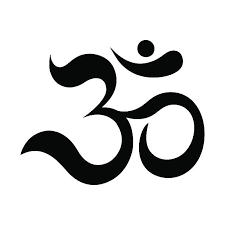
The Hindu Symbol
The Hindu symbol is made up of Sanskrit letters that spell the word 'Aum'. This is a sacred sound used in prayers for Hindus.

The Hindu Symbol

What is 'God' to Hindus?

The Hindus believe in the Trimurti---which is the three of the most significant forms of Brahman:
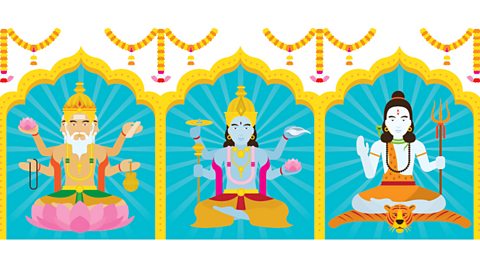
  • Brahman/ Brahma (Creator): Brahman/ Brahma is the Supreme God, and is also considered the ultimate reality. Hindus believe that 'he' is always present in anywhere and is also beyond the universe and time.
  • Vishnu (Preserver): She is known as the God of Protection, and is believed to protect the earth and the people.
  • Shiva (Destroyer): He is often associated with death and life, and is known to balance the universe. 

The Trimurti

To remember :

The difference between 'Brahman' (the ultimate reality) and 'Brahma' (the creator of God).


Avatar
A Hindu deity in human/ animal form (not taken seriously)

Hindu deities:

Examples and stories: Lord Rama and the Squirrel, The Butter Thief, and How Hanuman Got His Name.

How they are passed on: by parents teaching the stories to their children (it teaches people lessons of life.

Atman
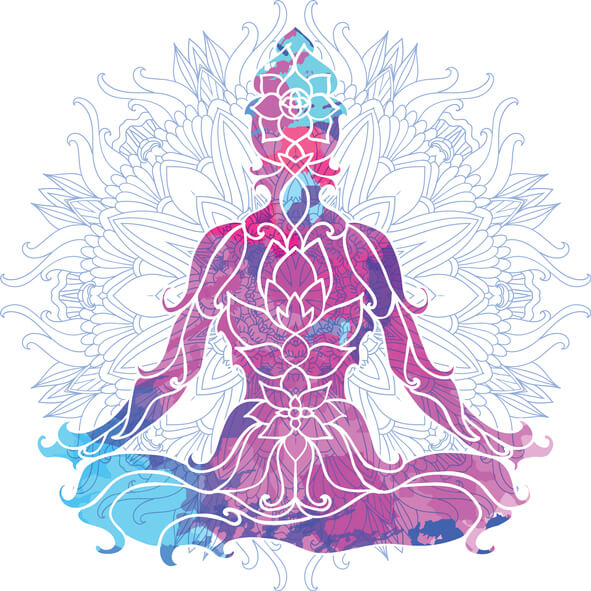
a person's inner self, soul or spirit; the living force in all of nature, which is eternal and will never disappear. (Atman is part of Brahman, which means every living creature is part of Brahman.)

Atman

The self (Atman, human life)
conscious, active, alive, never-changing, eternal.
The body (matter, body)
unable to move, unconscious, temporary, dead, ever-changing.

To remember :

Many Hindus choose to have a vegan diet as they believe that they should treat every living creature kindly (Atman)

What is the Hindu Meaning of Life?
Pali
an ancient Indian language
Samsara
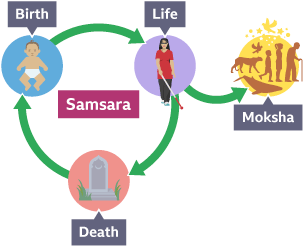
a continuous cycle of birth, death and rebirth (is a curse, as everyone is stuck in this cycle and wish to be released)

The Samsara Cycle

Moksha
Release from the Cycle of Samsara and to let your Atman join with Brahman.

To remember :

The goal of Hindus is to achieve Moksha (liberation or release form the cycle of Samsara.)

Reincarnation
Being born into the world after death in a new physical body. (Atman doesn't change.)

To remember :

For Hindus, reincarnation and going around the cycle of samsara is not ideal, as keeping the atman trapped in the material world keeps it away from the spiritual world (moksha)

Do Our Good and Bad Actions Control Our Destiny?
Karma
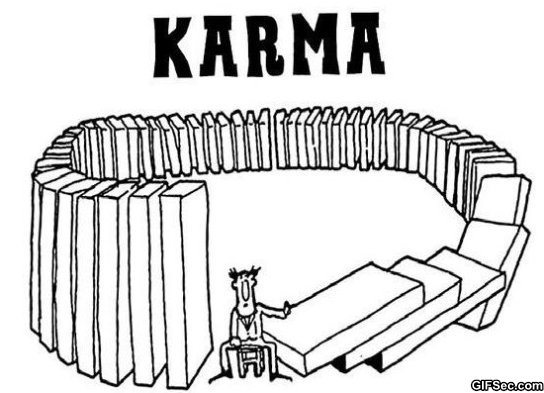
Actions. The belief that good actions have good consequences and bad actions have bad consequences.

Karma: This refers to the law of cause and effect (like laws of nature)

To remember :

Karma decides where you come back and what you come back as. (For e.g, if you did good things in your previous life, then you will get good karma and get a good life in your next life)

The Karmic Scale:
The karmic scale is the scale in order of living organisms. For example, a blade of grass might be at the bottom of the karmic scale, and a king is on the top of the karmic scale. Hindus believe that people move up and down the karmic scale because of their actions in life, which affect your karma and your karma decides what you will be in your next life.

What is Our Ultimate Goal in Life?

Moksha
Liberation from Samsara, the cycle of birth, death and rebirth.
Salvation
of the soul, which is rescued from the material world and delivered into the spiritual.
Yoga
'to join', 'to unite' with Brahman through performing various yogas.

Different types of Yogas:

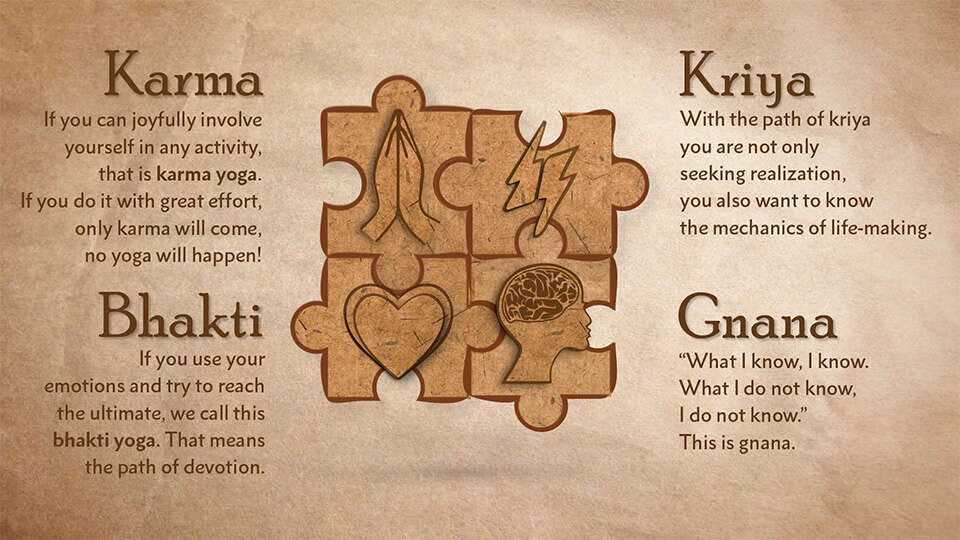
  • Karma Yoga (Action) Doing good things e.g. donating to charity, volunteering, helping, rescuing e.t.c
  • Jhana Yoga (Knowledge ) Give up worldly pleasure to focus on God, e.g. don't gamble e.t.c
  • Bhakti Yoga (Devotion) Showing devotion to God by praying/ worshipping e.t.c
  • Astanga Yoga (Meditation) Meditating using mantras or beads to find God with heart.

What is the purpose of religious rituals?

Puja
A sanskrit word for 'worship'
Mala
Prayer beads for praying
The Puja ceremony:
Many Hindus have a home shrine (usually located in the corner of the house or in a room) for daily devotion, where they honour their preferred Gods and Goddesses. Worship may be done alone or with the whole family. Different Hindus families have slightly different way of worshipping. The puja ceremony uses 5 senses.

The 5 senses:

  • Bell (hearing) To awaken the god or goddess and symbolise the beginning of the worship.
  • Food (taste) To make a gift, fruit or other food is placed in the shrine as an offering to the deity.
  • Murti (feel/ touch) An image of the god or goddess being worshipped.
  • Incense/ Flowers (smell) Burning incense sticks fill the room with scent, symbolising the presence of the deity. Flowers are often placed in the shrine to honour the deity.
  • Kum-kum Powder (sight) Making a coloured mark on the worshipper's forehead shows honour to the deity and reminds the worshipper of their devotion throughout the day.

Puja Objects

Performing Puja with a family (step-by-step)
1. Have the room or shrine cleaned and the mother of the house showered and dressed in clean clothes. 2. The mother pours water on the deity and dresses it with clean clothes. 3. The mother puts a spot of coloured paste (kum-kum powder+ water) between the eyes of the murti, on her own forehead and on the family members around her. 4. She prays in front of the shrine. She lets her mind be still and focus on God. 5. The mother now makes offerings (it's usually flowers or lighted incense sticks, along with a tray of fresh fruits) 6. The arti lamp is lit and waved in front of the murti. The mother places her hands over the lamp, onto her eyes then over her head. Now she and her family are ready to face the ay ahead. {The end of Puja. YAY!}

The Mandri

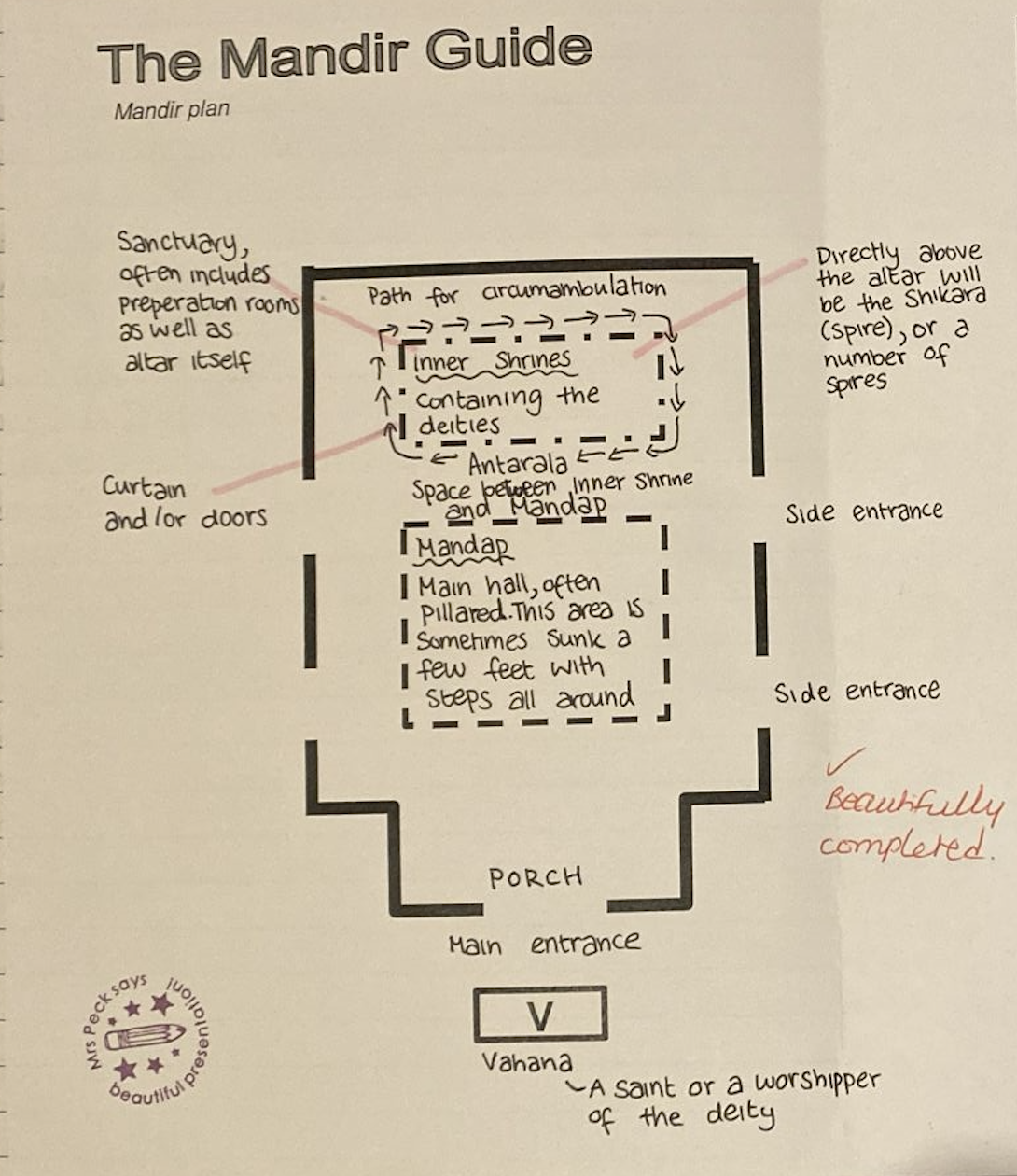
What is the Mandir?
The mandir is like a temple for Hindus to honour and worship God and Goddesses, where people can be encouraged.

The Mandir Guide

Is it Right to Fight?

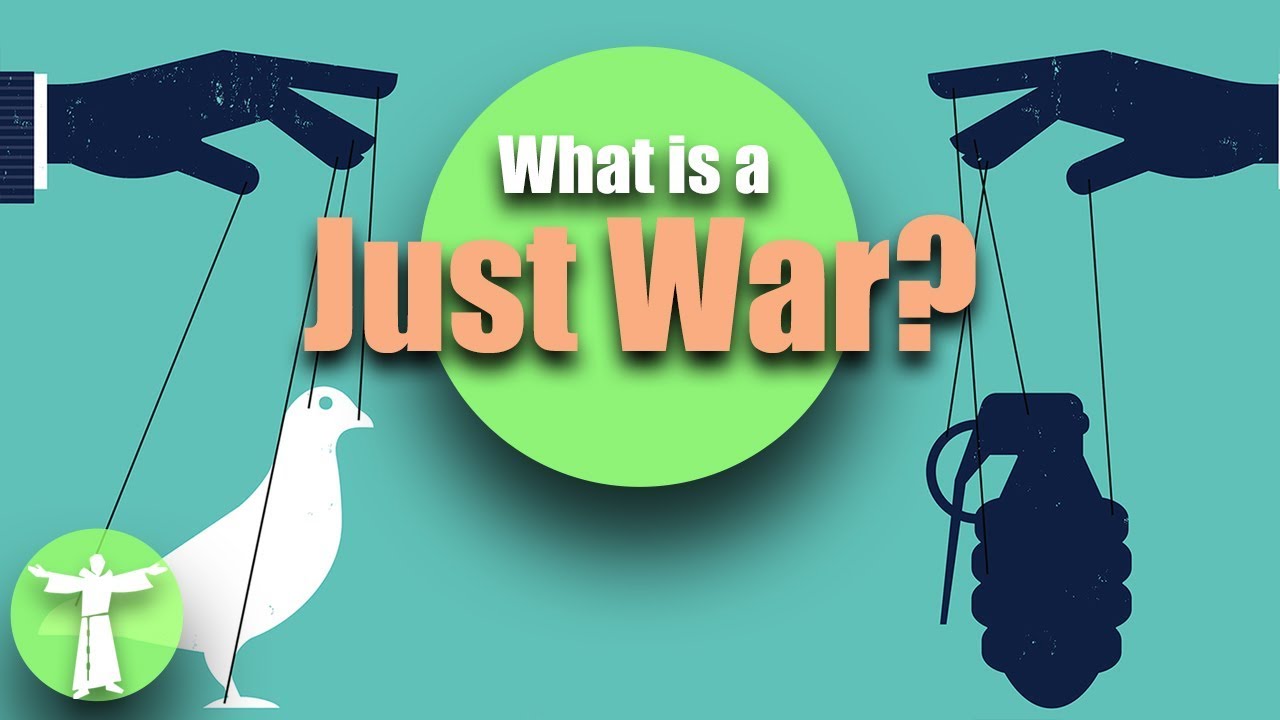
"Just War Theory"

(A list of circumstances when violence is necessary.)

1. A Last Resort (if all peaceful method fail)

2. A Just Cause (immediate correction)

3. Valid Authority (having the official permission to act)

4. Probable Success (likely to solve the problem)

5. Proportionality (fair and necessary)

6. Exit Strategy (an idea of how the conflict ends)
Ahimsa
A sanskrit word from "himsa", meaning violence. Then add a "a" into "himsa", making it "ahimsa", meaning. non-violence. ----> Hindus believe that one way to get good karma is to not do harm to other living beings, which is the opposite of "Just War Theory". saying that there is NEVER a good reason for violence.

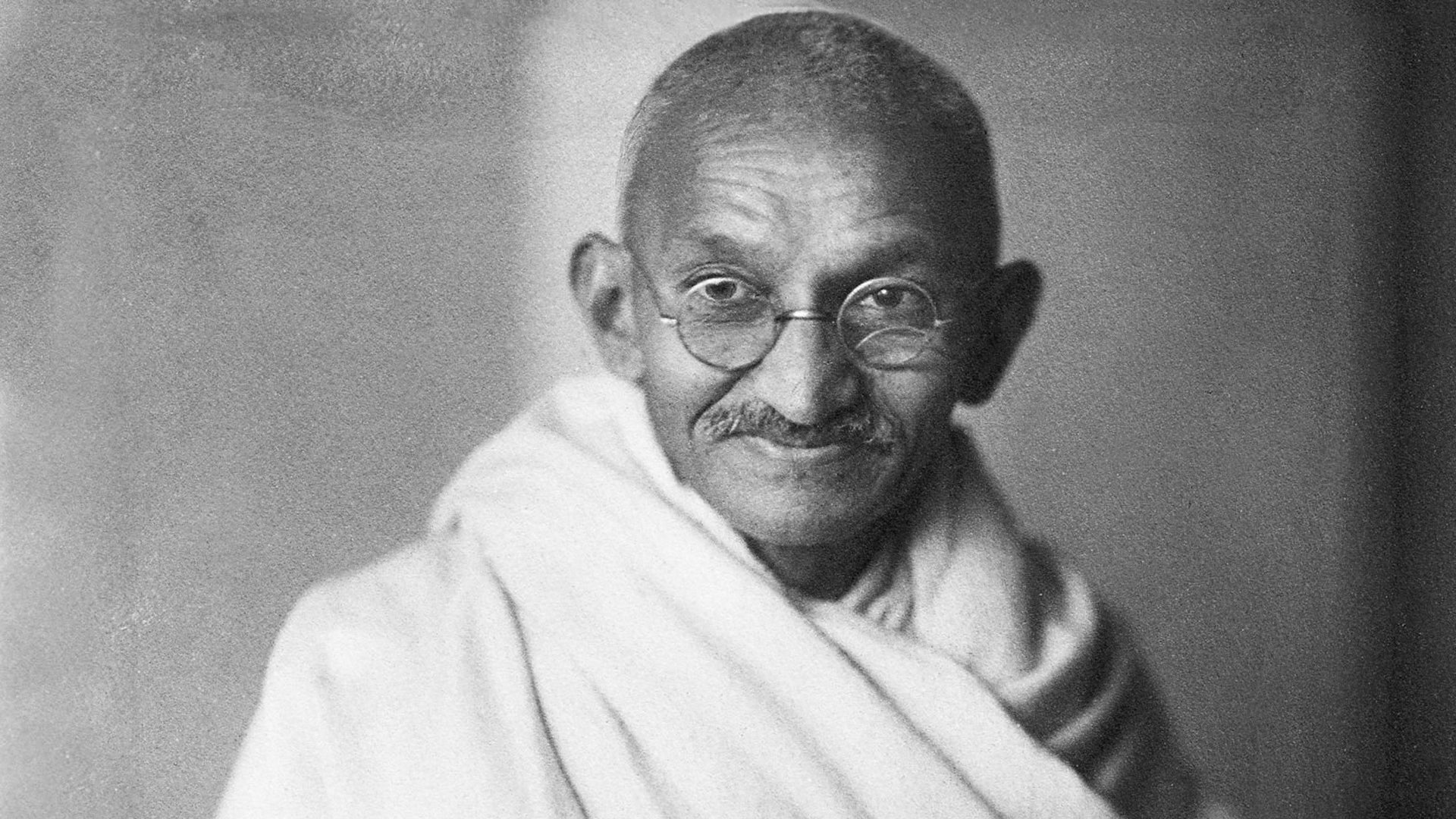
Who is Ghandi?

Mohandas Ghandi

Mohandas Ghandi
Ghandi was one of the most famous world leaders and championships for justice in the world. He is famous for holding his firm belief in Ahimsa and organising several non-violence protest against the British empire for Indian Independence from the British empire. Ghandi's protest were very successful, as the British authorities finally began to negotiate.

Is the Caste System right?

The Caste System
A level of society a person was born into. The caste people were born into was fixed for a lifetime and people of different castes tended to not mix with each other (The caste which someone was born into was decided by their karma in their previous life.)

Middle School
8th Grade

Hinduism Topic Check

PRS

What is Hinduism?

  • The oldest living religion.
  • The third largest religion in the world.
  • About 1.1 billion people are thought to be Hindus.


Hinduism
Sanatana Dharma (eternal law)
The Origin of Hinduism
Nobody knows exactly how and when Hinduism emerged, but we know that it is NOT based on the life or teachings of a particular person or group. All we know is that around 1500 B.C., the Indo-Aryan people migrated to the Indus Valley, where Hinduism first started to develop. This is where archaeologists discovered ancient bowls and cups with pictures of animals, Gods and Goddesses on it.

How it evolved:

About 3500 years ago, the people worshipped Gods of the sky, sun and wind. They also introduced the Sanskrit language to the region, in which many Hindu sacred texts have been written in. Hinduism gradually developed as different groups of people met and shared their ideas. Today, whilst many Hindus may have different beliefs and practices, they still share the same core beliefs.

The Hindu Symbol
The Hindu symbol is made up of Sanskrit letters that spell the word 'Aum'. This is a sacred sound used in prayers for Hindus.

The Hindu Symbol

What is 'God' to Hindus?

The Hindus believe in the Trimurti---which is the three of the most significant forms of Brahman:

  • Brahman/ Brahma (Creator): Brahman/ Brahma is the Supreme God, and is also considered the ultimate reality. Hindus believe that 'he' is always present in anywhere and is also beyond the universe and time.
  • Vishnu (Preserver): She is known as the God of Protection, and is believed to protect the earth and the people.
  • Shiva (Destroyer): He is often associated with death and life, and is known to balance the universe. 

The Trimurti

To remember :

The difference between 'Brahman' (the ultimate reality) and 'Brahma' (the creator of God).


Avatar
A Hindu deity in human/ animal form (not taken seriously)

Hindu deities:

Examples and stories: Lord Rama and the Squirrel, The Butter Thief, and How Hanuman Got His Name.

How they are passed on: by parents teaching the stories to their children (it teaches people lessons of life.


Atman
a person's inner self, soul or spirit; the living force in all of nature, which is eternal and will never disappear. (Atman is part of Brahman, which means every living creature is part of Brahman.)

Atman

The self (Atman, human life)
conscious, active, alive, never-changing, eternal.
The body (matter, body)
unable to move, unconscious, temporary, dead, ever-changing.

To remember :

Many Hindus choose to have a vegan diet as they believe that they should treat every living creature kindly (Atman)

What is the Hindu Meaning of Life?

Pali
an ancient Indian language
Samsara
a continuous cycle of birth, death and rebirth (is a curse, as everyone is stuck in this cycle and wish to be released)

The Samsara Cycle

Moksha
Release from the Cycle of Samsara and to let your Atman join with Brahman.

To remember :

The goal of Hindus is to achieve Moksha (liberation or release form the cycle of Samsara.)

Reincarnation
Being born into the world after death in a new physical body. (Atman doesn't change.)

To remember :

For Hindus, reincarnation and going around the cycle of samsara is not ideal, as keeping the atman trapped in the material world keeps it away from the spiritual world (moksha)

Do Our Good and Bad Actions Control Our Destiny?

Karma
Actions. The belief that good actions have good consequences and bad actions have bad consequences.

Karma: This refers to the law of cause and effect (like laws of nature)

To remember :

Karma decides where you come back and what you come back as. (For e.g, if you did good things in your previous life, then you will get good karma and get a good life in your next life)

The Karmic Scale:
The karmic scale is the scale in order of living organisms. For example, a blade of grass might be at the bottom of the karmic scale, and a king is on the top of the karmic scale. Hindus believe that people move up and down the karmic scale because of their actions in life, which affect your karma and your karma decides what you will be in your next life.

What is Our Ultimate Goal in Life?

Moksha
Liberation from Samsara, the cycle of birth, death and rebirth.
Salvation
of the soul, which is rescued from the material world and delivered into the spiritual.
Yoga
'to join', 'to unite' with Brahman through performing various yogas.

Different types of Yogas:

  • Karma Yoga (Action) Doing good things e.g. donating to charity, volunteering, helping, rescuing e.t.c
  • Jhana Yoga (Knowledge ) Give up worldly pleasure to focus on God, e.g. don't gamble e.t.c
  • Bhakti Yoga (Devotion) Showing devotion to God by praying/ worshipping e.t.c
  • Astanga Yoga (Meditation) Meditating using mantras or beads to find God with heart.

What is the purpose of religious rituals?

Puja
A sanskrit word for 'worship'
Mala
Prayer beads for praying
The Puja ceremony:
Many Hindus have a home shrine (usually located in the corner of the house or in a room) for daily devotion, where they honour their preferred Gods and Goddesses. Worship may be done alone or with the whole family. Different Hindus families have slightly different way of worshipping. The puja ceremony uses 5 senses.

The 5 senses:

  • Bell (hearing) To awaken the god or goddess and symbolise the beginning of the worship.
  • Food (taste) To make a gift, fruit or other food is placed in the shrine as an offering to the deity.
  • Murti (feel/ touch) An image of the god or goddess being worshipped.
  • Incense/ Flowers (smell) Burning incense sticks fill the room with scent, symbolising the presence of the deity. Flowers are often placed in the shrine to honour the deity.
  • Kum-kum Powder (sight) Making a coloured mark on the worshipper's forehead shows honour to the deity and reminds the worshipper of their devotion throughout the day.

Puja Objects

Performing Puja with a family (step-by-step)
1. Have the room or shrine cleaned and the mother of the house showered and dressed in clean clothes. 2. The mother pours water on the deity and dresses it with clean clothes. 3. The mother puts a spot of coloured paste (kum-kum powder+ water) between the eyes of the murti, on her own forehead and on the family members around her. 4. She prays in front of the shrine. She lets her mind be still and focus on God. 5. The mother now makes offerings (it's usually flowers or lighted incense sticks, along with a tray of fresh fruits) 6. The arti lamp is lit and waved in front of the murti. The mother places her hands over the lamp, onto her eyes then over her head. Now she and her family are ready to face the ay ahead. {The end of Puja. YAY!}

The Mandri

What is the Mandir?
The mandir is like a temple for Hindus to honour and worship God and Goddesses, where people can be encouraged.

The Mandir Guide

Is it Right to Fight?

"Just War Theory"

(A list of circumstances when violence is necessary.)

1. A Last Resort (if all peaceful method fail)

2. A Just Cause (immediate correction)

3. Valid Authority (having the official permission to act)

4. Probable Success (likely to solve the problem)

5. Proportionality (fair and necessary)

6. Exit Strategy (an idea of how the conflict ends)

Ahimsa
A sanskrit word from "himsa", meaning violence. Then add a "a" into "himsa", making it "ahimsa", meaning. non-violence. ----> Hindus believe that one way to get good karma is to not do harm to other living beings, which is the opposite of "Just War Theory". saying that there is NEVER a good reason for violence.

Who is Ghandi?

Mohandas Ghandi

Mohandas Ghandi
Ghandi was one of the most famous world leaders and championships for justice in the world. He is famous for holding his firm belief in Ahimsa and organising several non-violence protest against the British empire for Indian Independence from the British empire. Ghandi's protest were very successful, as the British authorities finally began to negotiate.

Is the Caste System right?

The Caste System
A level of society a person was born into. The caste people were born into was fixed for a lifetime and people of different castes tended to not mix with each other (The caste which someone was born into was decided by their karma in their previous life.)