
Partielo | Créer ta fiche de révision en ligne rapidement

green revolution and changing pattern of crops

Introduction

  • The Green Revolution was an endeavour initiated by Norman Borlaug in the 1960s. He is known as the 'Father of Green Revolution' in world.
  • It led to him winning the Nobel Peace Prize in 1970 for his work in developing High Yielding Varieties (HYVs) of wheat.
  • In India, the Green Revolution was mainly led by M.S. Swaminathan.
  • The Green Revolution resulted in a great increase in production of food grains (especially wheat and rice) due to the introduction into developing countries of new, high-yielding variety seeds, beginning in the mid-20th century.
  • Its early dramatic successes were in Mexico and the Indian subcontinent.
  • The Green Revolution, spreading over the period from 1967-68 to 1977-78, changed India’s status from a food-deficient country to one of the world's leading agricultural nations.

Green Revolution

Objectives of Green Revolution

  • Short Term: The revolution was launched to address India’s hunger crisis during the second Five Year Plan.
  • Long Term: The long term objectives included overall agriculture modernization based on rural development, industrial development; infrastructure, raw material etc.
  • Employment: To provide employment to both agricultural and industrial workers.
  • Scientific Studies: Producing stronger plants which could withstand extreme climates and diseases.
  • Globalization of the Agricultural World: By spreading technology to non-industrialized nations and setting up many corporations in major agricultural areas.

Basic Elements of the Green Revolution

  • Expansion of Farming Areas: Although the area of land under cultivation was being increased from 1947 itself, this was not enough to meet the rising demand.
  • The Green Revolution provided assistance in this quantitative expansion of farmlands.
  • Double-cropping System: Double cropping was a primary feature of the Green Revolution. The decision was made to have two crop seasons per year instead of just one.
  • The one-season-per-year practice was based on the fact that there is only one rainy season annually.
  • Water for the second phase now came from huge irrigation projects. Dams were built and other simple irrigation techniques were also adopted.
  • Using seeds with improved genetics: Using seeds with superior genetics was the scientific aspect of the Green Revolution.
  • The Indian Council for Agricultural Research developed new strains of high yield variety seeds, mainly wheat and rice, millet and corn.
  • Important Crops in the Revolution:
  • Main crops were Wheat, Rice, Jowar, Bajra and Maize.
  • Non-food grains were excluded from the ambit of the new strategy.
  • Wheat remained the mainstay of the Green Revolution for years.

Green Revolution in India

Background of Green Revolution in India

  • In 1943, India suffered from the world’s worst recorded food crisis; the Bengal Famine, which led to the death of approximately 4 million people in eastern India due to hunger.
  • Even after independence in 1947, until 1967 the government largely concentrated on expanding the farming areas.
  • But the population was growing at a much faster rate than food production.
  • This called for an immediate and drastic action to increase yield. The action came in the form of the Green Revolution.
  • The green revolution in India refers to a period when Indian Agriculture was converted into an industrial system due to the adoption of modern methods and technology such as the use of HYV seeds, tractors, irrigation facilities, pesticides and fertilizers.
  • It was funded by the US and the Indian Government and the Ford and Rockefeller Foundation.
  • The Green Revolution in India is largely the Wheat Revolution as the wheat production increased by more than three times between 1967-68 and 2003-04, while the overall increase in the production of cereals was only two times

Positive Impacts of Green Revolution

  • Tremendous Increase in Crop Produce: It resulted in a grain output of 131 million tonnes in the year 1978-79 and established India as one of the world's biggest agricultural producers.
  • The crop area under high yielding varieties of wheat and rice grew considerably during the Green Revolution.
  • Reduced Import of Food-Grains: India became self-sufficient in food-grains and had sufficient stock in the central pool, even, at times, India was in a position to export food-grains.
  • The per capita net availability of food-grains has also increased.
  • Benefits to the Farmers: The introduction of the Green Revolution helped the farmers in raising their level of income.
  • Farmers ploughed back their surplus income for improving agricultural productivity.
  • The big farmers with more than 10 hectares of land were particularly benefited by this revolution by investing large amounts of money in various inputs like HYV seeds, fertilizers, machines, etc. It also promoted capitalist farming.
  • Industrial Growth: The Revolution brought about large scale farm mechanization which created demand for different types of machines like tractors, harvesters, threshers, combines, diesel engines, electric motors, pumping sets, etc.
  • Besides, demand for chemical fertilizers, pesticides, insecticides, weedicides, etc. also increased considerably.
  • Several agricultural products were also used as raw materials in various industries known as agro based industries.
  • Rural Employment: There was an appreciable increase in the demand for labour force due to multiple cropping and use of fertilizers.
  • The Green Revolution created plenty of jobs not only for agricultural workers but also industrial workers by creating related facilities such as factories and hydroelectric power stations.

Negative Impacts of Green Revolution

  • Non-Food Grains Left Out : Although all food-grains including wheat, rice, jowar, bajra and maize have gained from the revolution, other crops such as coarse cereals, pulses and oilseeds were left out of the ambit of the revolution.
  • Major commercial crops like cotton, jute, tea and sugarcane were also left almost untouched by the Green Revolution.
  • Limited Coverage of HYVP: High Yielding Variety Programme (HYVP) was restricted to only five crops: Wheat, Rice, Jowar, Bajra and Maize.
  • Therefore, non-food grains were excluded from the ambit of the new strategy.
  • The HYV seeds in the non-food crops were either not developed so far or they were not good enough for farmers to risk their adoption.
  • Regional Disparities:
  • Green Revolution technology has given birth to growing disparities in economic development at interred and intra regional levels.
  • It has so far affected only 40 percent of the total cropped area and 60 per cent is still untouched by it.
  • The most affected areas are Punjab, Haryana and western Uttar Pradesh in the north and Andhra Pradesh and Tamil Nadu in the south.
  • It has hardly touched the Eastern region, including Assam, Bihar, West Bengal and Orissa and arid and semi-arid areas of Western and Southern India.
  • The Green Revolution affected only those areas which were already better placed from an agricultural point of view.
  • Thus the problem of regional disparities has further aggravated as a result of the Green Revolution.
  • Excessive Usage of Chemicals: The Green Revolution resulted in a large-scale use of pesticides and synthetic nitrogen fertilisers for improved irrigation projects and crop varieties.
  • However, little or no efforts were made to educate farmers about the high risk associated with the intensive use of pesticides.
  • Pesticides were sprayed on crops usually by untrained farm labourers without following instructions or precautions.
  • This causes more harm than good to crops and also becomes a cause for environment and soil pollution.
  • Water Consumption: The crops introduced during the green revolution were water-intensive crops.
  • Most of these crops being cereals, required almost 50% of dietary water footprint.
  • Canal systems were introduced, and irrigation pumps also sucked out the groundwater to supply the water-intensive crops, such as sugarcane and rice, thus depleting the groundwater levels.
  • Punjab is a major wheat- and rice-cultivating area, and hence it is one of the highest water depleted regions in India.
  • Impacts on Soil and Crop Production: Repeated crop cycle in order to ensure increased crop production depleted the soil's nutrients.
  • To meet the needs of new kinds of seeds, farmers increased fertilizer usage.
  • The pH level of the soil increased due to the usage of these alkaline chemicals.
  • Toxic chemicals in the soil destroyed beneficial pathogens, which further led to the decline in the yield.
  • Unemployment: Except in Punjab, and to some extent in Haryana, farm mechanization under the Green Revolution created widespread unemployment among agricultural labourers in the rural areas.
  • The worst affected were the poor and the landless labourers.
  • Health Hazards: The large-scale use of chemical fertilizers and pesticides such as Phosphamidon, Methomyl, Phorate, Triazophos and Monocrotophos resulted in resulted in a number of critical health illnesses including cancer, renal failure, stillborn babies and birth defects.

Conclusion

  • Overall, the Green Revolution was a major achievement for many developing countries, specially India and gave them an unprecedented level of national food security.
  • It represented the successful adaptation and transfer of the same scientific revolution in agriculture that the industrial countries had already appropriated for themselves.
  • However, lesser heed was paid to factors other than ensuring food security such as environment, the poor farmers and their education about the know-how of such chemicals.
  • As a way forward, the policymakers must target the poor more precisely to ensure that they receive greater direct benefits from new technologies and those technologies will also need to be more environmentally sustainable.
  • Also, taking lessons from the past, it must be ensured that such initiatives include all of the beneficiaries covering all the regions rather than sticking to a limited field.

Green Revolution – Krishonnati Yojana

  • The government of India introduced the Green Revolution Krishonnati Yojana in 2005 to boost the agriculture sector.
  • Government through the scheme plans to develop the agriculture and allied sector in a holistic & scientific manner to increase the income of farmers.
  • It comprises of 11 schemes and mission under a single umbrella scheme:
  • Mission for Integrated Development of Horticulture (MIDH)
  • National Food Security Mission (NFSM)
  • National Mission for Sustainable Agriculture (NMSA)
  • Submission on Agriculture Extension (SMAE)
  • Sub-Mission on Seeds and Planting Material (SMSP)
  • Sub-Mission on Agricultural Mechanization (SMAM)
  • Sub-Mission on Plant Protection and Plan Quarantine (SMPPQ)
  • Integrated Scheme on Agriculture Census, Economics and Statistics (ISACES)
  • Integrated Scheme on Agricultural Cooperation (ISAC)
  • Integrated Scheme on Agricultural Marketing (ISAM)
  • National e-Governance Plan in Agriculture (NeGP-A)

The Evergreen Revolution

  • The improvements brought out by the Green Revolution came at the cost of adverse environmental effects in areas subjected to intensive farming.
  • However, where population pressure is high, there is no option except to produce more food.
  • Hence, the need for the Evergreen Revolution was called out by Dr. M S Swaminathan, the Father of the Green Revolution in India.
  • Under the Evergreen Revolution, it is envisaged that productivity must increase, but in ways which are environmentally safe, economically viable and socially sustainable.
  • The evergreen revolution involves the integration of ecological principles in technology development and dissemination.


Cropping patterns in India

The cropping pattern in India is determined mainly by rainfall, climate, temperature, and soil type.

Cropping Pattern describes the proportion of area under cultivation of different crops at a point of time, changes in this distribution over time, and factors determining these changes.

The multiplicity of cropping systems has been one of the main features of Indian agriculture and it is attributed to rain-fed agriculture and the prevailing socio-economic situations of the farming communities.

Two distinct irrigated cropping systems emerged in India:

  1. One is the Indo-Gangetic Plain region comprising the states of Punjab, Haryana, the plains of Uttar Pradesh, Bihar, and the plains of Jammu & Kashmir.
  2. The other ecosystem may be carved out of coastal areas of Andhra Pradesh and Tamil Nadu.

Based on homogeneity and commonness, major crop regions in India may be divided as follows:

  • Rice Region
  • Wheat Region
  • Jowar-Bajra Region
  • Cotton Region
  • Millet and Maize Region
  • Fruit and Spice Region

Based on combinations of crops grown following cropping systems exist in India:

Monocropping: Monocropping is when the field is used to grow only one crop season after season. This is harmful to soil health.

Crop Rotation: Crop Rotation means changing the type of crops grown in the field each season or each year (or changing from crops to fallow). Crop rotation improves the soil structure and fertility, and because it helps control weeds, pests, and diseases.

Sequential Cropping: Sequential Cropping involves growing two crops in the same field, one after the other in the same year.

Intercropping:  Intercropping means growing two or more crops in the same field at the same time.

Mixed Intercropping: Planting the main crop in rows and then spreading the seeds of the intercrop (such as a cover crop) in between is called mixed intercropping.

Row Intercropping: Planting both the main crop and the intercrop in rows. The rows make weeding and harvesting easier than with mixed intercropping.

Stir Cropping: Stir Cropping involves planting broad strips of several crops in the field.

Changing cropping patterns in India

A cropping pattern is a dynamic concept as it changes over space and time which occurs due to an increase in the prices of crops.

Green Revolution also led to changes in the cropping patterns. Rice was introduced to Punjab, Haryana, and Uttar Pradesh.

New technologies in Indian agriculture play a vital role in determining the cultivation of crops.

Farmers have changed their crop patterns to reap the benefits of economic expansion due to which they are intensively moving towards the cultivation of cash crops from traditional crops.

Population explosion and urbanization have led to land conversion, boosting intensive farming, and have brought changes in cropping patterns.

Cropping patterns may also be influenced by government action undertaken in the form of an administrative and legislative measures. Supply of inputs by the government, intensive schemes for various crops, various government campaigns, transportation, and marketing provisions also influence the cropping pattern in the country.

Conclusion

Indian agriculture has been seeing a deceleration in growth compared to the growth of the larger economy which has been widening disparities between the incomes of workers in non-agricultural and agricultural sectors.

Indian farmers are very much poverty-stricken and conservative still their cropping pattern can be changed through appropriate changes in economic motives.

There is a need to shift to sustainable agriculture. The policies should consider the environmental cost as well. The planning should be done with the fact that the next generation also needs to have food security.


Indian agriculture is an important aspect of India’s economy; learn here about the major crops, and cropping patterns in various parts of the country to understand the agriculture sector better.

Agriculture accounted for 14% of India’s GDP in 2016-17 and employed more than half a billion people. Indian Agriculture is dominated by small-scale farming and is characterized by low productivity.

The Indian agriculture sector employs the largest female labor force in the country which is close to 65%.

But it suffers from the twin problems of low productivity and excess workforce employed in it resulting in a low per capita productivity of the workforce. This leads to lesser wages and a high level of poverty.

The agriculture sector in India has undergone very limited liberalization. The state still plays a predominant role in Indian agriculture. It is one of the highly subsidized sectors of the economy because concerns about food security and poverty lead the government to remain strongly involved through fixing prices for key agricultural products at the farm and consumer levels, high border protection, bans on or support for exports, and massive subsidies for key inputs such as fertilizers, water, and electricity.


Cropping seasons

India is geographically very vast, hence it has various food and non-food crops which are cultivated in three main cropping seasons which are rabi, Kharif, and Zaid.


  • The Kharif season starts with the southwest monsoon and supports the cultivation of tropical crops.
  • Rabi season is for winter crops as these crops require less amount of water for growth.
  • While Zaid season comes between Rabi and Kharif.
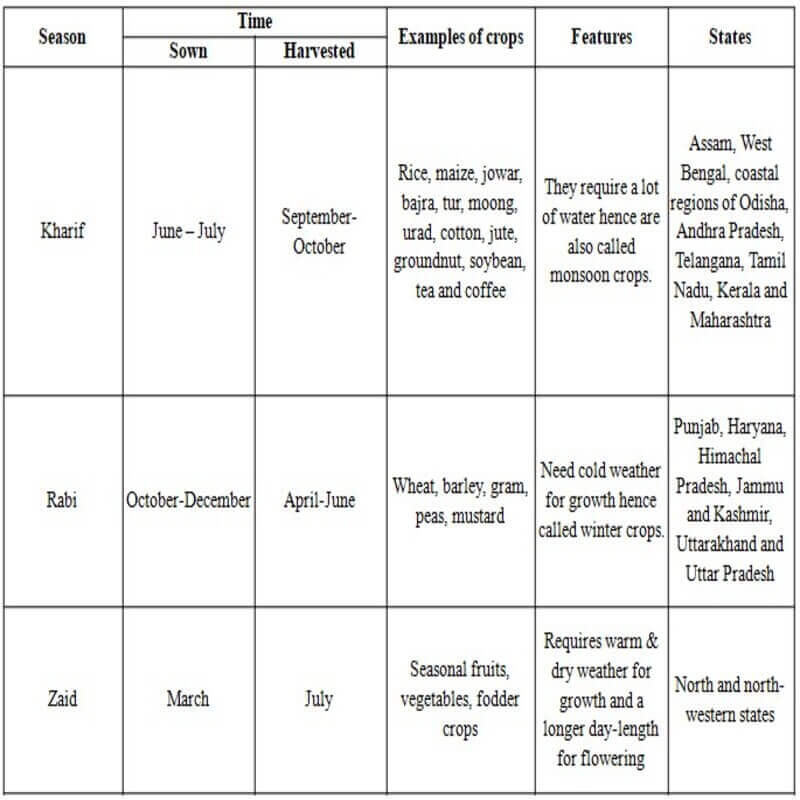
cropping seasons

Major crops in India can be classified into:

Food crops:  Rice, Wheat, Millets, Maize, and Pulses.

Cash crops: Sugarcane, Oilseeds, Horticulture crops, Tea, Coffee, Rubber, Cotton, and Jute.

Major Food crops in various parts of the country

Rice
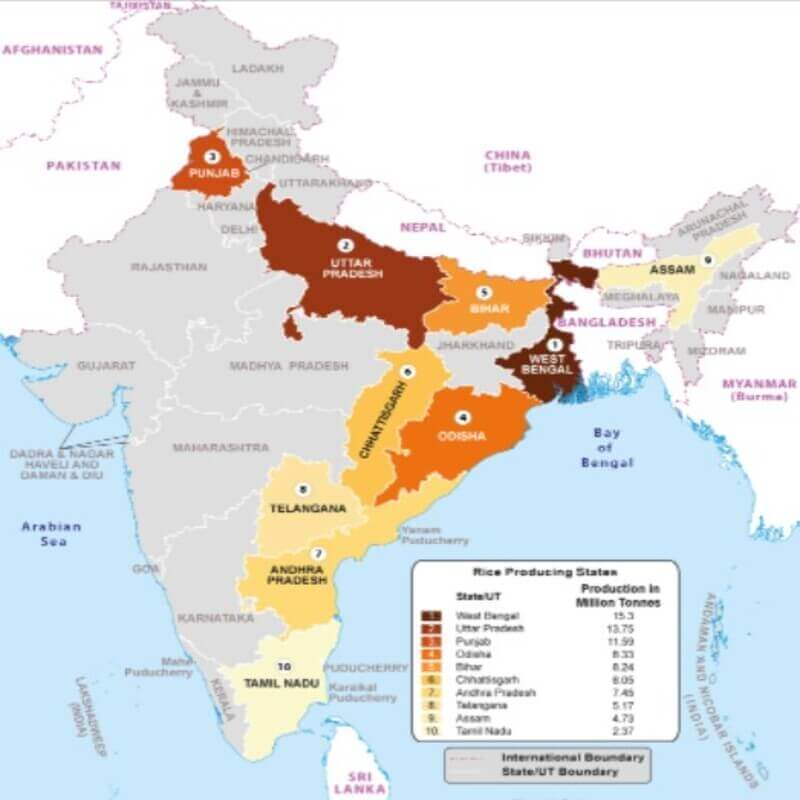
major crop riceCourtesy: mapsofindia.com

India is an important center of rice cultivation. Rice is cultivated in the largest areas in India.

  • Historians believe that while the Indica variety of rice was first domesticated in the area covering the foothills of the Eastern Himalayas (i.e. north-eastern India), stretching through Burma, Thailand, Laos, Vietnam, and Southern China, the japonica variety was domesticated from wild rice in southern China which was introduced to India.
  • Perennial wild rice is still growing in Assam and Nepal. It seems to have appeared around 1400 BC in southern India after its domestication in the northern plains.

Climatic Requirements

In India rice is grown under widely varying conditions of altitude and climate.

  • Rice cultivation in India extends from 8 to35ºN latitudes and from sea level to as high as 3000 meters.
  • The Rice crop needs a hot and humid climate. It is best suited to regions that have high humidity, prolonged sunshine, and an assured supply of water.
  • It required around 150-300 cm of rainfall and deep clayey and loamy soil.
  • The average temperature required throughout the life period of the crop ranges from 21 to 37º C.
  • The maximum temperature which the crop can tolerate is 40º C to 42º C.

Nutritional value of Rice

  • Rice is a nutritional staple food that provides instant energy as its most important component is carbohydrate (starch).
  • Rice is poor in nitrogenous substances with an average composition of these substances being only 8 percent and fat content or lipids only negligible, i.e., 1 percent, and due to this reason, it is considered a complete food for eating.
  • Rice flour is rich in starch and is used for making various food materials. It is also used in some instances by brewers to make alcoholic malt.
  • Likewise, rice straw mixed with other materials is used to produce porcelain, glass, and pottery.
  • Rice is also used in the manufacturing of paper pulp and livestock bedding.

Crop Production Practices

In India Rice is mainly grown in two types of soils- uplands and low lands. The method of cultivation of rice in a particular region depends largely on factors such as the situation of the land, type of soil, irrigation facilities, availability of laborers intensity, and distribution of rainfalls. The crop of rice is grown with the following methods:

  • Dry or Semi-dry upland cultivation
  • Broadcasting the seed
  • Sowing the seed behind the plow or drilling
  • Wet or lowland cultivation
  • Transplanting in puddled fields.
  • Broadcasting sprouted seeds in puddled fields.

Selection of Seeds

The use of quality seeds in the cultivation of rice is an important factor to get a better crop yield. Seeds intended for sowing should satisfy the following requirements:

  • The seed should belong to the proper variety, which is proposed to be grown.
  • The seed should be clean and free from obvious mixtures of other seeds.
  • The seed should be mature, well developed, and plump in size.
  • The seed should be free from obvious signs of age or bad storage.
  • The seed should have a high germinating capacity.

Before sowing the seed should be treated with fungicides which protect the seed against soil-borne fungi and also give a boost to the seedlings.

Wheat
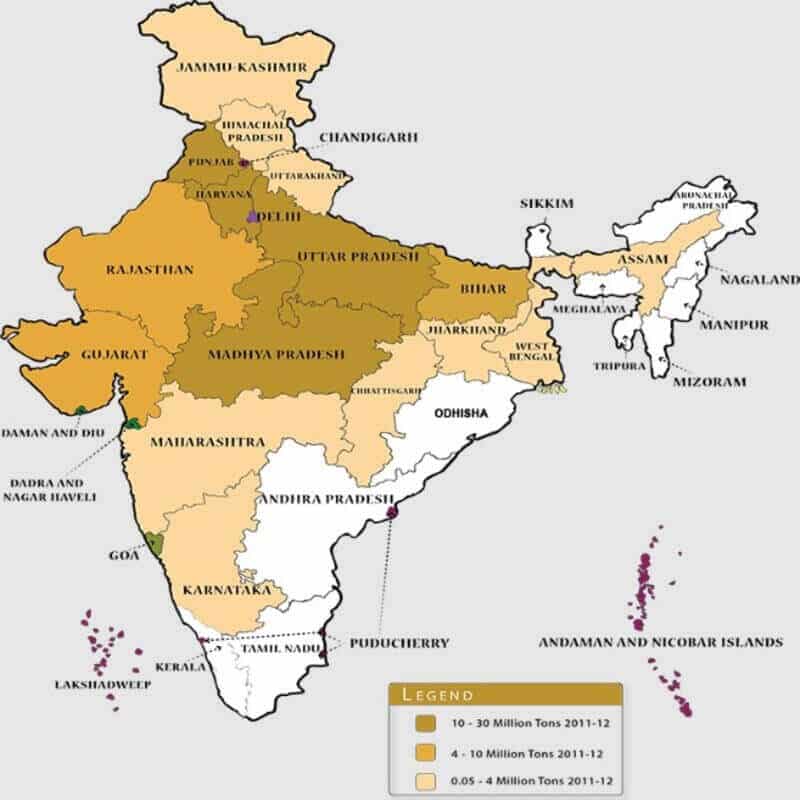
major crop wheatCourtesy: farmer.gov.in

Wheat is the main cereal crop in India. Indian wheat is largely a soft/medium-hard, medium protein, white bread wheat, somewhat similar to U.S. hard white wheat.

  • Wheat grown in central and western India is typically hard, with high protein and high gluten content.
  • India also produces around 1.0-1.2 million tons of durum wheat, mostly in the state of Madhya Pradesh.
  • Most Indian durum is not marketed separately due to segregation problems in the market yards.

The Government of India appointed a commission in 1961 to assess the feasibility of increasing crop productivity under prevailing Indian ecological conditions. As a result of various steps taken by Govt. of India, the Wheat scenario in our country has completely changed.

In the post-Independence era, the country used to import Wheat for our needs but due to a bumper increase in the production and productivity of Wheat in the ‘Green Revolution‘ period in the late sixties, our country became self-dependent on Wheat production.

At present, the country is producing much more excess Wheat than the requirement.

Climate requirement

The wheat crop has wide adaptability:

  • It can be grown not only in the tropical and sub-tropical zones but also in the temperate zone and the cold tracts of the far north, beyond even the 60-degree north latitude.
  • Wheat can tolerate severe cold and snow and resume growth with the setting in of warm weather in spring.
  • It can be cultivated from sea level to as high as 3300 meters.

The best wheat is produced in areas favored with cool, moist weather during the major portion of the growing period followed by dry, warm weather to enable the grain to ripen properly.

  • The optimum temperature range for the ideal germination of wheat seed is 20-25º C.
  • Rains just after sowing hamper germination and encourage seedling blight.
  • Areas with a warm and damp climate are not suited for wheat growing.

During the heading and flowering stages, excessively high or low temperatures and drought are harmful to wheat. Cloudy weather, with high humidity and low temperatures, is conducive to rust attack. Wheat is mainly a rabi (winter) season crop in India.

Soil

Wheat is grown in a variety of soils in India:

  • Soils with a clay loam or loam texture, good structure, and moderate water holding capacity are ideal for wheat cultivation.
  • Heavy soil with good drainage is suitable for wheat cultivation under dry conditions.
  • These soils absorb and retain rainwater well. Heavy soils with poor structure and poor drainage are not suitable as wheat is sensitive to waterlogging.
  • Wheat can be successfully grown on lighter soils provided their water and nutrient holding capacity are improved.


green revolution and changing pattern of crops

Introduction

  • The Green Revolution was an endeavour initiated by Norman Borlaug in the 1960s. He is known as the 'Father of Green Revolution' in world.
  • It led to him winning the Nobel Peace Prize in 1970 for his work in developing High Yielding Varieties (HYVs) of wheat.
  • In India, the Green Revolution was mainly led by M.S. Swaminathan.
  • The Green Revolution resulted in a great increase in production of food grains (especially wheat and rice) due to the introduction into developing countries of new, high-yielding variety seeds, beginning in the mid-20th century.
  • Its early dramatic successes were in Mexico and the Indian subcontinent.
  • The Green Revolution, spreading over the period from 1967-68 to 1977-78, changed India’s status from a food-deficient country to one of the world's leading agricultural nations.

Green Revolution

Objectives of Green Revolution

  • Short Term: The revolution was launched to address India’s hunger crisis during the second Five Year Plan.
  • Long Term: The long term objectives included overall agriculture modernization based on rural development, industrial development; infrastructure, raw material etc.
  • Employment: To provide employment to both agricultural and industrial workers.
  • Scientific Studies: Producing stronger plants which could withstand extreme climates and diseases.
  • Globalization of the Agricultural World: By spreading technology to non-industrialized nations and setting up many corporations in major agricultural areas.

Basic Elements of the Green Revolution

  • Expansion of Farming Areas: Although the area of land under cultivation was being increased from 1947 itself, this was not enough to meet the rising demand.
  • The Green Revolution provided assistance in this quantitative expansion of farmlands.
  • Double-cropping System: Double cropping was a primary feature of the Green Revolution. The decision was made to have two crop seasons per year instead of just one.
  • The one-season-per-year practice was based on the fact that there is only one rainy season annually.
  • Water for the second phase now came from huge irrigation projects. Dams were built and other simple irrigation techniques were also adopted.
  • Using seeds with improved genetics: Using seeds with superior genetics was the scientific aspect of the Green Revolution.
  • The Indian Council for Agricultural Research developed new strains of high yield variety seeds, mainly wheat and rice, millet and corn.
  • Important Crops in the Revolution:
  • Main crops were Wheat, Rice, Jowar, Bajra and Maize.
  • Non-food grains were excluded from the ambit of the new strategy.
  • Wheat remained the mainstay of the Green Revolution for years.

Green Revolution in India

Background of Green Revolution in India

  • In 1943, India suffered from the world’s worst recorded food crisis; the Bengal Famine, which led to the death of approximately 4 million people in eastern India due to hunger.
  • Even after independence in 1947, until 1967 the government largely concentrated on expanding the farming areas.
  • But the population was growing at a much faster rate than food production.
  • This called for an immediate and drastic action to increase yield. The action came in the form of the Green Revolution.
  • The green revolution in India refers to a period when Indian Agriculture was converted into an industrial system due to the adoption of modern methods and technology such as the use of HYV seeds, tractors, irrigation facilities, pesticides and fertilizers.
  • It was funded by the US and the Indian Government and the Ford and Rockefeller Foundation.
  • The Green Revolution in India is largely the Wheat Revolution as the wheat production increased by more than three times between 1967-68 and 2003-04, while the overall increase in the production of cereals was only two times

Positive Impacts of Green Revolution

  • Tremendous Increase in Crop Produce: It resulted in a grain output of 131 million tonnes in the year 1978-79 and established India as one of the world's biggest agricultural producers.
  • The crop area under high yielding varieties of wheat and rice grew considerably during the Green Revolution.
  • Reduced Import of Food-Grains: India became self-sufficient in food-grains and had sufficient stock in the central pool, even, at times, India was in a position to export food-grains.
  • The per capita net availability of food-grains has also increased.
  • Benefits to the Farmers: The introduction of the Green Revolution helped the farmers in raising their level of income.
  • Farmers ploughed back their surplus income for improving agricultural productivity.
  • The big farmers with more than 10 hectares of land were particularly benefited by this revolution by investing large amounts of money in various inputs like HYV seeds, fertilizers, machines, etc. It also promoted capitalist farming.
  • Industrial Growth: The Revolution brought about large scale farm mechanization which created demand for different types of machines like tractors, harvesters, threshers, combines, diesel engines, electric motors, pumping sets, etc.
  • Besides, demand for chemical fertilizers, pesticides, insecticides, weedicides, etc. also increased considerably.
  • Several agricultural products were also used as raw materials in various industries known as agro based industries.
  • Rural Employment: There was an appreciable increase in the demand for labour force due to multiple cropping and use of fertilizers.
  • The Green Revolution created plenty of jobs not only for agricultural workers but also industrial workers by creating related facilities such as factories and hydroelectric power stations.

Negative Impacts of Green Revolution

  • Non-Food Grains Left Out : Although all food-grains including wheat, rice, jowar, bajra and maize have gained from the revolution, other crops such as coarse cereals, pulses and oilseeds were left out of the ambit of the revolution.
  • Major commercial crops like cotton, jute, tea and sugarcane were also left almost untouched by the Green Revolution.
  • Limited Coverage of HYVP: High Yielding Variety Programme (HYVP) was restricted to only five crops: Wheat, Rice, Jowar, Bajra and Maize.
  • Therefore, non-food grains were excluded from the ambit of the new strategy.
  • The HYV seeds in the non-food crops were either not developed so far or they were not good enough for farmers to risk their adoption.
  • Regional Disparities:
  • Green Revolution technology has given birth to growing disparities in economic development at interred and intra regional levels.
  • It has so far affected only 40 percent of the total cropped area and 60 per cent is still untouched by it.
  • The most affected areas are Punjab, Haryana and western Uttar Pradesh in the north and Andhra Pradesh and Tamil Nadu in the south.
  • It has hardly touched the Eastern region, including Assam, Bihar, West Bengal and Orissa and arid and semi-arid areas of Western and Southern India.
  • The Green Revolution affected only those areas which were already better placed from an agricultural point of view.
  • Thus the problem of regional disparities has further aggravated as a result of the Green Revolution.
  • Excessive Usage of Chemicals: The Green Revolution resulted in a large-scale use of pesticides and synthetic nitrogen fertilisers for improved irrigation projects and crop varieties.
  • However, little or no efforts were made to educate farmers about the high risk associated with the intensive use of pesticides.
  • Pesticides were sprayed on crops usually by untrained farm labourers without following instructions or precautions.
  • This causes more harm than good to crops and also becomes a cause for environment and soil pollution.
  • Water Consumption: The crops introduced during the green revolution were water-intensive crops.
  • Most of these crops being cereals, required almost 50% of dietary water footprint.
  • Canal systems were introduced, and irrigation pumps also sucked out the groundwater to supply the water-intensive crops, such as sugarcane and rice, thus depleting the groundwater levels.
  • Punjab is a major wheat- and rice-cultivating area, and hence it is one of the highest water depleted regions in India.
  • Impacts on Soil and Crop Production: Repeated crop cycle in order to ensure increased crop production depleted the soil's nutrients.
  • To meet the needs of new kinds of seeds, farmers increased fertilizer usage.
  • The pH level of the soil increased due to the usage of these alkaline chemicals.
  • Toxic chemicals in the soil destroyed beneficial pathogens, which further led to the decline in the yield.
  • Unemployment: Except in Punjab, and to some extent in Haryana, farm mechanization under the Green Revolution created widespread unemployment among agricultural labourers in the rural areas.
  • The worst affected were the poor and the landless labourers.
  • Health Hazards: The large-scale use of chemical fertilizers and pesticides such as Phosphamidon, Methomyl, Phorate, Triazophos and Monocrotophos resulted in resulted in a number of critical health illnesses including cancer, renal failure, stillborn babies and birth defects.

Conclusion

  • Overall, the Green Revolution was a major achievement for many developing countries, specially India and gave them an unprecedented level of national food security.
  • It represented the successful adaptation and transfer of the same scientific revolution in agriculture that the industrial countries had already appropriated for themselves.
  • However, lesser heed was paid to factors other than ensuring food security such as environment, the poor farmers and their education about the know-how of such chemicals.
  • As a way forward, the policymakers must target the poor more precisely to ensure that they receive greater direct benefits from new technologies and those technologies will also need to be more environmentally sustainable.
  • Also, taking lessons from the past, it must be ensured that such initiatives include all of the beneficiaries covering all the regions rather than sticking to a limited field.

Green Revolution – Krishonnati Yojana

  • The government of India introduced the Green Revolution Krishonnati Yojana in 2005 to boost the agriculture sector.
  • Government through the scheme plans to develop the agriculture and allied sector in a holistic & scientific manner to increase the income of farmers.
  • It comprises of 11 schemes and mission under a single umbrella scheme:
  • Mission for Integrated Development of Horticulture (MIDH)
  • National Food Security Mission (NFSM)
  • National Mission for Sustainable Agriculture (NMSA)
  • Submission on Agriculture Extension (SMAE)
  • Sub-Mission on Seeds and Planting Material (SMSP)
  • Sub-Mission on Agricultural Mechanization (SMAM)
  • Sub-Mission on Plant Protection and Plan Quarantine (SMPPQ)
  • Integrated Scheme on Agriculture Census, Economics and Statistics (ISACES)
  • Integrated Scheme on Agricultural Cooperation (ISAC)
  • Integrated Scheme on Agricultural Marketing (ISAM)
  • National e-Governance Plan in Agriculture (NeGP-A)

The Evergreen Revolution

  • The improvements brought out by the Green Revolution came at the cost of adverse environmental effects in areas subjected to intensive farming.
  • However, where population pressure is high, there is no option except to produce more food.
  • Hence, the need for the Evergreen Revolution was called out by Dr. M S Swaminathan, the Father of the Green Revolution in India.
  • Under the Evergreen Revolution, it is envisaged that productivity must increase, but in ways which are environmentally safe, economically viable and socially sustainable.
  • The evergreen revolution involves the integration of ecological principles in technology development and dissemination.


Cropping patterns in India

The cropping pattern in India is determined mainly by rainfall, climate, temperature, and soil type.

Cropping Pattern describes the proportion of area under cultivation of different crops at a point of time, changes in this distribution over time, and factors determining these changes.

The multiplicity of cropping systems has been one of the main features of Indian agriculture and it is attributed to rain-fed agriculture and the prevailing socio-economic situations of the farming communities.

Two distinct irrigated cropping systems emerged in India:

  1. One is the Indo-Gangetic Plain region comprising the states of Punjab, Haryana, the plains of Uttar Pradesh, Bihar, and the plains of Jammu & Kashmir.
  2. The other ecosystem may be carved out of coastal areas of Andhra Pradesh and Tamil Nadu.

Based on homogeneity and commonness, major crop regions in India may be divided as follows:

  • Rice Region
  • Wheat Region
  • Jowar-Bajra Region
  • Cotton Region
  • Millet and Maize Region
  • Fruit and Spice Region

Based on combinations of crops grown following cropping systems exist in India:

Monocropping: Monocropping is when the field is used to grow only one crop season after season. This is harmful to soil health.

Crop Rotation: Crop Rotation means changing the type of crops grown in the field each season or each year (or changing from crops to fallow). Crop rotation improves the soil structure and fertility, and because it helps control weeds, pests, and diseases.

Sequential Cropping: Sequential Cropping involves growing two crops in the same field, one after the other in the same year.

Intercropping:  Intercropping means growing two or more crops in the same field at the same time.

Mixed Intercropping: Planting the main crop in rows and then spreading the seeds of the intercrop (such as a cover crop) in between is called mixed intercropping.

Row Intercropping: Planting both the main crop and the intercrop in rows. The rows make weeding and harvesting easier than with mixed intercropping.

Stir Cropping: Stir Cropping involves planting broad strips of several crops in the field.

Changing cropping patterns in India

A cropping pattern is a dynamic concept as it changes over space and time which occurs due to an increase in the prices of crops.

Green Revolution also led to changes in the cropping patterns. Rice was introduced to Punjab, Haryana, and Uttar Pradesh.

New technologies in Indian agriculture play a vital role in determining the cultivation of crops.

Farmers have changed their crop patterns to reap the benefits of economic expansion due to which they are intensively moving towards the cultivation of cash crops from traditional crops.

Population explosion and urbanization have led to land conversion, boosting intensive farming, and have brought changes in cropping patterns.

Cropping patterns may also be influenced by government action undertaken in the form of an administrative and legislative measures. Supply of inputs by the government, intensive schemes for various crops, various government campaigns, transportation, and marketing provisions also influence the cropping pattern in the country.

Conclusion

Indian agriculture has been seeing a deceleration in growth compared to the growth of the larger economy which has been widening disparities between the incomes of workers in non-agricultural and agricultural sectors.

Indian farmers are very much poverty-stricken and conservative still their cropping pattern can be changed through appropriate changes in economic motives.

There is a need to shift to sustainable agriculture. The policies should consider the environmental cost as well. The planning should be done with the fact that the next generation also needs to have food security.


Indian agriculture is an important aspect of India’s economy; learn here about the major crops, and cropping patterns in various parts of the country to understand the agriculture sector better.

Agriculture accounted for 14% of India’s GDP in 2016-17 and employed more than half a billion people. Indian Agriculture is dominated by small-scale farming and is characterized by low productivity.

The Indian agriculture sector employs the largest female labor force in the country which is close to 65%.

But it suffers from the twin problems of low productivity and excess workforce employed in it resulting in a low per capita productivity of the workforce. This leads to lesser wages and a high level of poverty.

The agriculture sector in India has undergone very limited liberalization. The state still plays a predominant role in Indian agriculture. It is one of the highly subsidized sectors of the economy because concerns about food security and poverty lead the government to remain strongly involved through fixing prices for key agricultural products at the farm and consumer levels, high border protection, bans on or support for exports, and massive subsidies for key inputs such as fertilizers, water, and electricity.


Cropping seasons

India is geographically very vast, hence it has various food and non-food crops which are cultivated in three main cropping seasons which are rabi, Kharif, and Zaid.


  • The Kharif season starts with the southwest monsoon and supports the cultivation of tropical crops.
  • Rabi season is for winter crops as these crops require less amount of water for growth.
  • While Zaid season comes between Rabi and Kharif.

cropping seasons

Major crops in India can be classified into:

Food crops:  Rice, Wheat, Millets, Maize, and Pulses.

Cash crops: Sugarcane, Oilseeds, Horticulture crops, Tea, Coffee, Rubber, Cotton, and Jute.

Major Food crops in various parts of the country

Rice

major crop riceCourtesy: mapsofindia.com

India is an important center of rice cultivation. Rice is cultivated in the largest areas in India.

  • Historians believe that while the Indica variety of rice was first domesticated in the area covering the foothills of the Eastern Himalayas (i.e. north-eastern India), stretching through Burma, Thailand, Laos, Vietnam, and Southern China, the japonica variety was domesticated from wild rice in southern China which was introduced to India.
  • Perennial wild rice is still growing in Assam and Nepal. It seems to have appeared around 1400 BC in southern India after its domestication in the northern plains.

Climatic Requirements

In India rice is grown under widely varying conditions of altitude and climate.

  • Rice cultivation in India extends from 8 to35ºN latitudes and from sea level to as high as 3000 meters.
  • The Rice crop needs a hot and humid climate. It is best suited to regions that have high humidity, prolonged sunshine, and an assured supply of water.
  • It required around 150-300 cm of rainfall and deep clayey and loamy soil.
  • The average temperature required throughout the life period of the crop ranges from 21 to 37º C.
  • The maximum temperature which the crop can tolerate is 40º C to 42º C.

Nutritional value of Rice

  • Rice is a nutritional staple food that provides instant energy as its most important component is carbohydrate (starch).
  • Rice is poor in nitrogenous substances with an average composition of these substances being only 8 percent and fat content or lipids only negligible, i.e., 1 percent, and due to this reason, it is considered a complete food for eating.
  • Rice flour is rich in starch and is used for making various food materials. It is also used in some instances by brewers to make alcoholic malt.
  • Likewise, rice straw mixed with other materials is used to produce porcelain, glass, and pottery.
  • Rice is also used in the manufacturing of paper pulp and livestock bedding.

Crop Production Practices

In India Rice is mainly grown in two types of soils- uplands and low lands. The method of cultivation of rice in a particular region depends largely on factors such as the situation of the land, type of soil, irrigation facilities, availability of laborers intensity, and distribution of rainfalls. The crop of rice is grown with the following methods:

  • Dry or Semi-dry upland cultivation
  • Broadcasting the seed
  • Sowing the seed behind the plow or drilling
  • Wet or lowland cultivation
  • Transplanting in puddled fields.
  • Broadcasting sprouted seeds in puddled fields.

Selection of Seeds

The use of quality seeds in the cultivation of rice is an important factor to get a better crop yield. Seeds intended for sowing should satisfy the following requirements:

  • The seed should belong to the proper variety, which is proposed to be grown.
  • The seed should be clean and free from obvious mixtures of other seeds.
  • The seed should be mature, well developed, and plump in size.
  • The seed should be free from obvious signs of age or bad storage.
  • The seed should have a high germinating capacity.

Before sowing the seed should be treated with fungicides which protect the seed against soil-borne fungi and also give a boost to the seedlings.

Wheat

major crop wheatCourtesy: farmer.gov.in

Wheat is the main cereal crop in India. Indian wheat is largely a soft/medium-hard, medium protein, white bread wheat, somewhat similar to U.S. hard white wheat.

  • Wheat grown in central and western India is typically hard, with high protein and high gluten content.
  • India also produces around 1.0-1.2 million tons of durum wheat, mostly in the state of Madhya Pradesh.
  • Most Indian durum is not marketed separately due to segregation problems in the market yards.

The Government of India appointed a commission in 1961 to assess the feasibility of increasing crop productivity under prevailing Indian ecological conditions. As a result of various steps taken by Govt. of India, the Wheat scenario in our country has completely changed.

In the post-Independence era, the country used to import Wheat for our needs but due to a bumper increase in the production and productivity of Wheat in the ‘Green Revolution‘ period in the late sixties, our country became self-dependent on Wheat production.

At present, the country is producing much more excess Wheat than the requirement.

Climate requirement

The wheat crop has wide adaptability:

  • It can be grown not only in the tropical and sub-tropical zones but also in the temperate zone and the cold tracts of the far north, beyond even the 60-degree north latitude.
  • Wheat can tolerate severe cold and snow and resume growth with the setting in of warm weather in spring.
  • It can be cultivated from sea level to as high as 3300 meters.

The best wheat is produced in areas favored with cool, moist weather during the major portion of the growing period followed by dry, warm weather to enable the grain to ripen properly.

  • The optimum temperature range for the ideal germination of wheat seed is 20-25º C.
  • Rains just after sowing hamper germination and encourage seedling blight.
  • Areas with a warm and damp climate are not suited for wheat growing.

During the heading and flowering stages, excessively high or low temperatures and drought are harmful to wheat. Cloudy weather, with high humidity and low temperatures, is conducive to rust attack. Wheat is mainly a rabi (winter) season crop in India.

Soil

Wheat is grown in a variety of soils in India:

  • Soils with a clay loam or loam texture, good structure, and moderate water holding capacity are ideal for wheat cultivation.
  • Heavy soil with good drainage is suitable for wheat cultivation under dry conditions.
  • These soils absorb and retain rainwater well. Heavy soils with poor structure and poor drainage are not suitable as wheat is sensitive to waterlogging.
  • Wheat can be successfully grown on lighter soils provided their water and nutrient holding capacity are improved.