
Partielo | Créer ta fiche de révision en ligne rapidement
College or University

(2.10) Genetic Variation in Prokaryotes

BINARY FISSION

-bacterial cells reproduce asexually by binary fission.

-preceded by replication of bacterial chromosome which begins at the single of origin of replication

-through binary fission, most of the bacterial colony are genetically identical to the parents cell. however, mutation that form during rapid reproduction which can greatly increase the genetic variation


mechanism of binary fission:

  1. the replication of bacterial cell begins at the single origin of replication which results in the formation of 2 origin of replication
  2. the cell elongates and the orderly increase of cellular structures and components, while the replication continues simultaneously. the chromosome continues to replicate bidirectionally and a specific site of chromosome is attached to the cell surface membrane; eventually 1 origin of replication independently moves to the other end of the cell. 2 origins of replication are at the opposite ends of the cell. replication ends at the side of termination, bacterium cell is now twice the initial size and it now has 2 chromosome molecules.
  3. plasma membrane invaginates and grow inwardly, together with the laying down of the new cell wall material, forming a septum at the midpoint of the bacterial cell
  4. after the septum is completed, the parent bacterium cell pinches into 2 separate genetically identical daughter cells. each of the daughter cells inherit a whole bacterial genome that is identical to the parent bacterial cell


TRANSFORMATION

-transformation is the uptake of foreign DNA from the surrounding environment by bacterial cells. as a result, bacteria cell's genotype and subsequent phenotype can be altered

-donor and recipient do not come into contact

-a short piece of DNA, released to the environment is actively taken up by recipient cell. this foreign allele replaces native allele in the bacterial chromosome by homologous recombination

-resulting cell is now considered a recombinant as its chromosome has DNA derived form 2 different sources/different cells

-a bacterial cell must be competent to take up DNA from its surroundings

-natural competence is highly regulated in bacteria


process of transformation:

  1. following the death of bacterium, free DNA fragments from bacterium are released into the environment
  2. closely-related, competent bacteria are able to and may take up some of this foreign DNA
  3. double stranded donor DNA fragment binds to cell surface protein on the surface of the competent cell, which recognizes DNA from closely related species
  4. one DNA strand is hydrolyzed by the envelope-associated exonuclease during uptake. the other DNA strand is associated with small proteins and moves through the cell surface membrane into the cell. the process of up taking foreign DNA from the environment requires energy expenditure
  5. inside the recipient cell, the single-stranded DNA fragments align with the homologous region of the bacterial genome and integrated into the genome by a breakage and reunion mechanism---homologous recombination


TRANSDUCTION

-transduction occurs when bacteriophage carries and transfer bacterial genes from one bacterial cell to another bacterial cell as a result of aberrations in the phage reproductive cycle


generalized transduction:

-may occur during the lytic cycle of bacteriophages and can transfer any part of the bacterial genome

  1. a small piece of bacterial host cell's degraded DNA is packaged within the icosahedral capsid, rather than the phage genome due to an error during the viral particle assembly process
  2. when the bacterial lyses, it releases some phages that contain the host bacterium DNA instead of the viral DNA. as a result, these phages are incapable of initiating virus infection as they do not contain viral DNA
  3. when the phage attach to another bacterium, it inject this foreign bacterium DNA instead of the phage genome into its new host cell
  4. this foreign DNA remains double-stranded during transfer. both strands are integrated and may subsequently replace the homologous region found on the bacterial chromosome of its new host via homologous recombination


specialized transduction:

-may occur during lysogenic cycle of the bacteriophages and can only transfer a small specific region of the bacterial DNA that is adjacent to the prophage

  1. when prophage is excised from the bacterial chromosome, it sometimes take with it a small region of the adjacent bacterial DNA due to improper excision
  2. the bacterial genes found on the adjacent DNA are injected, along with the phage genome into the new host cell and are stably incorporated under proper circumstances.
  3. specialized transduction only transfer those genes on the bacterial chromosome that is adjacent to the prophage


CONJUGATION

-conjugation is the gene transfer that requires direct contact between the donor and recipient cells (same or different species)

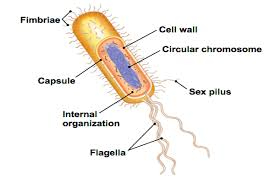
-the presence of the DNA molecule (F factor) enables prokaryotic cells to form sex pilus an donate DNA during conjugation

-transfer of DNA is one way

-a sex pilus from the F+ cell initially joins the 2 cells and creates a cytoplasmic bridge between cells


F factor:

-F factor is made up of 25 genes, and can exist either as a plasmid or a segment of DNA within the bacterial chromosome

-F factor that exists as a plasmid= F plasmid. F plasmid can be integrated into the bacterial chromosome via genetic recombination or replicates autonomously

-cells containing F plasmid= F+ cells. F+ cells function as DNA donor during conjugation

cells lacking F plasmid= F- cells. F- cells function as DNA recipient during conjugation

-F+ condition is transferable in which a F+ cell converts a F- cell to a F+ cell when the 2 cells conjugate and an entire F plasmid is transferred

-F plasmid encodes for the production of sex pilus, a protein appendage that attaches the donor cell to the recipient cell. the sex pilus of the donor cell recognizes and binds to the specific receptor sites on the cell wall of the recipient cell


process of conjugation:

  1. conjugation begins by making contact between the donor and the recipient cell. F+ donor cell, containing the F plasmid, synthesizes the sex pilus which extends towards the F- recipient cell. the sex pilus then recognizes and binds to the specific receptor sites on the cell wall of the recipient cell. this attaches the donor cell to the recipient cell
  2. F plasmid then becomes activated when the protein-encoded endonuclease cleaves a single strand of the plasmid DNA at the origin of transfer
  3. the sex pilus retracts and pulls the donor and recipient cells together. a single strand of the F plasmid which begins at the origin of transfer, enters the F- recipient cell
  4. a complementary strand to the single stranded plasmid that remains within the donor cell is synthesized by the rolling circle mechanism. for the single stranded plasmid that has been transferred into the recipient cell, a complementary strand to this single-stranded plasmid DNA is synthesized via the normal DNA replication mechanism. the recipient cell now becomes an F+ cell. both F+ cells disconnect and separate
College or University

(2.10) Genetic Variation in Prokaryotes

BINARY FISSION

-bacterial cells reproduce asexually by binary fission.

-preceded by replication of bacterial chromosome which begins at the single of origin of replication

-through binary fission, most of the bacterial colony are genetically identical to the parents cell. however, mutation that form during rapid reproduction which can greatly increase the genetic variation


mechanism of binary fission:

  1. the replication of bacterial cell begins at the single origin of replication which results in the formation of 2 origin of replication
  2. the cell elongates and the orderly increase of cellular structures and components, while the replication continues simultaneously. the chromosome continues to replicate bidirectionally and a specific site of chromosome is attached to the cell surface membrane; eventually 1 origin of replication independently moves to the other end of the cell. 2 origins of replication are at the opposite ends of the cell. replication ends at the side of termination, bacterium cell is now twice the initial size and it now has 2 chromosome molecules.
  3. plasma membrane invaginates and grow inwardly, together with the laying down of the new cell wall material, forming a septum at the midpoint of the bacterial cell
  4. after the septum is completed, the parent bacterium cell pinches into 2 separate genetically identical daughter cells. each of the daughter cells inherit a whole bacterial genome that is identical to the parent bacterial cell


TRANSFORMATION

-transformation is the uptake of foreign DNA from the surrounding environment by bacterial cells. as a result, bacteria cell's genotype and subsequent phenotype can be altered

-donor and recipient do not come into contact

-a short piece of DNA, released to the environment is actively taken up by recipient cell. this foreign allele replaces native allele in the bacterial chromosome by homologous recombination

-resulting cell is now considered a recombinant as its chromosome has DNA derived form 2 different sources/different cells

-a bacterial cell must be competent to take up DNA from its surroundings

-natural competence is highly regulated in bacteria


process of transformation:

  1. following the death of bacterium, free DNA fragments from bacterium are released into the environment
  2. closely-related, competent bacteria are able to and may take up some of this foreign DNA
  3. double stranded donor DNA fragment binds to cell surface protein on the surface of the competent cell, which recognizes DNA from closely related species
  4. one DNA strand is hydrolyzed by the envelope-associated exonuclease during uptake. the other DNA strand is associated with small proteins and moves through the cell surface membrane into the cell. the process of up taking foreign DNA from the environment requires energy expenditure
  5. inside the recipient cell, the single-stranded DNA fragments align with the homologous region of the bacterial genome and integrated into the genome by a breakage and reunion mechanism---homologous recombination


TRANSDUCTION

-transduction occurs when bacteriophage carries and transfer bacterial genes from one bacterial cell to another bacterial cell as a result of aberrations in the phage reproductive cycle


generalized transduction:

-may occur during the lytic cycle of bacteriophages and can transfer any part of the bacterial genome

  1. a small piece of bacterial host cell's degraded DNA is packaged within the icosahedral capsid, rather than the phage genome due to an error during the viral particle assembly process
  2. when the bacterial lyses, it releases some phages that contain the host bacterium DNA instead of the viral DNA. as a result, these phages are incapable of initiating virus infection as they do not contain viral DNA
  3. when the phage attach to another bacterium, it inject this foreign bacterium DNA instead of the phage genome into its new host cell
  4. this foreign DNA remains double-stranded during transfer. both strands are integrated and may subsequently replace the homologous region found on the bacterial chromosome of its new host via homologous recombination


specialized transduction:

-may occur during lysogenic cycle of the bacteriophages and can only transfer a small specific region of the bacterial DNA that is adjacent to the prophage

  1. when prophage is excised from the bacterial chromosome, it sometimes take with it a small region of the adjacent bacterial DNA due to improper excision
  2. the bacterial genes found on the adjacent DNA are injected, along with the phage genome into the new host cell and are stably incorporated under proper circumstances.
  3. specialized transduction only transfer those genes on the bacterial chromosome that is adjacent to the prophage


CONJUGATION

-conjugation is the gene transfer that requires direct contact between the donor and recipient cells (same or different species)

-the presence of the DNA molecule (F factor) enables prokaryotic cells to form sex pilus an donate DNA during conjugation

-transfer of DNA is one way

-a sex pilus from the F+ cell initially joins the 2 cells and creates a cytoplasmic bridge between cells


F factor:

-F factor is made up of 25 genes, and can exist either as a plasmid or a segment of DNA within the bacterial chromosome

-F factor that exists as a plasmid= F plasmid. F plasmid can be integrated into the bacterial chromosome via genetic recombination or replicates autonomously

-cells containing F plasmid= F+ cells. F+ cells function as DNA donor during conjugation

cells lacking F plasmid= F- cells. F- cells function as DNA recipient during conjugation

-F+ condition is transferable in which a F+ cell converts a F- cell to a F+ cell when the 2 cells conjugate and an entire F plasmid is transferred

-F plasmid encodes for the production of sex pilus, a protein appendage that attaches the donor cell to the recipient cell. the sex pilus of the donor cell recognizes and binds to the specific receptor sites on the cell wall of the recipient cell


process of conjugation:

  1. conjugation begins by making contact between the donor and the recipient cell. F+ donor cell, containing the F plasmid, synthesizes the sex pilus which extends towards the F- recipient cell. the sex pilus then recognizes and binds to the specific receptor sites on the cell wall of the recipient cell. this attaches the donor cell to the recipient cell
  2. F plasmid then becomes activated when the protein-encoded endonuclease cleaves a single strand of the plasmid DNA at the origin of transfer
  3. the sex pilus retracts and pulls the donor and recipient cells together. a single strand of the F plasmid which begins at the origin of transfer, enters the F- recipient cell
  4. a complementary strand to the single stranded plasmid that remains within the donor cell is synthesized by the rolling circle mechanism. for the single stranded plasmid that has been transferred into the recipient cell, a complementary strand to this single-stranded plasmid DNA is synthesized via the normal DNA replication mechanism. the recipient cell now becomes an F+ cell. both F+ cells disconnect and separate