- A company chooses to go public when it wants to expand it financial borders, growth requires decent capital pool.
- Shares can also be used as acquisition currency in M&A transactions.
- IPOs are also an exit opportunity for the founders of the company.
- Investors in an IPO can be divided into three major groups : - Retail investors, institutional investors or Hedge funds.
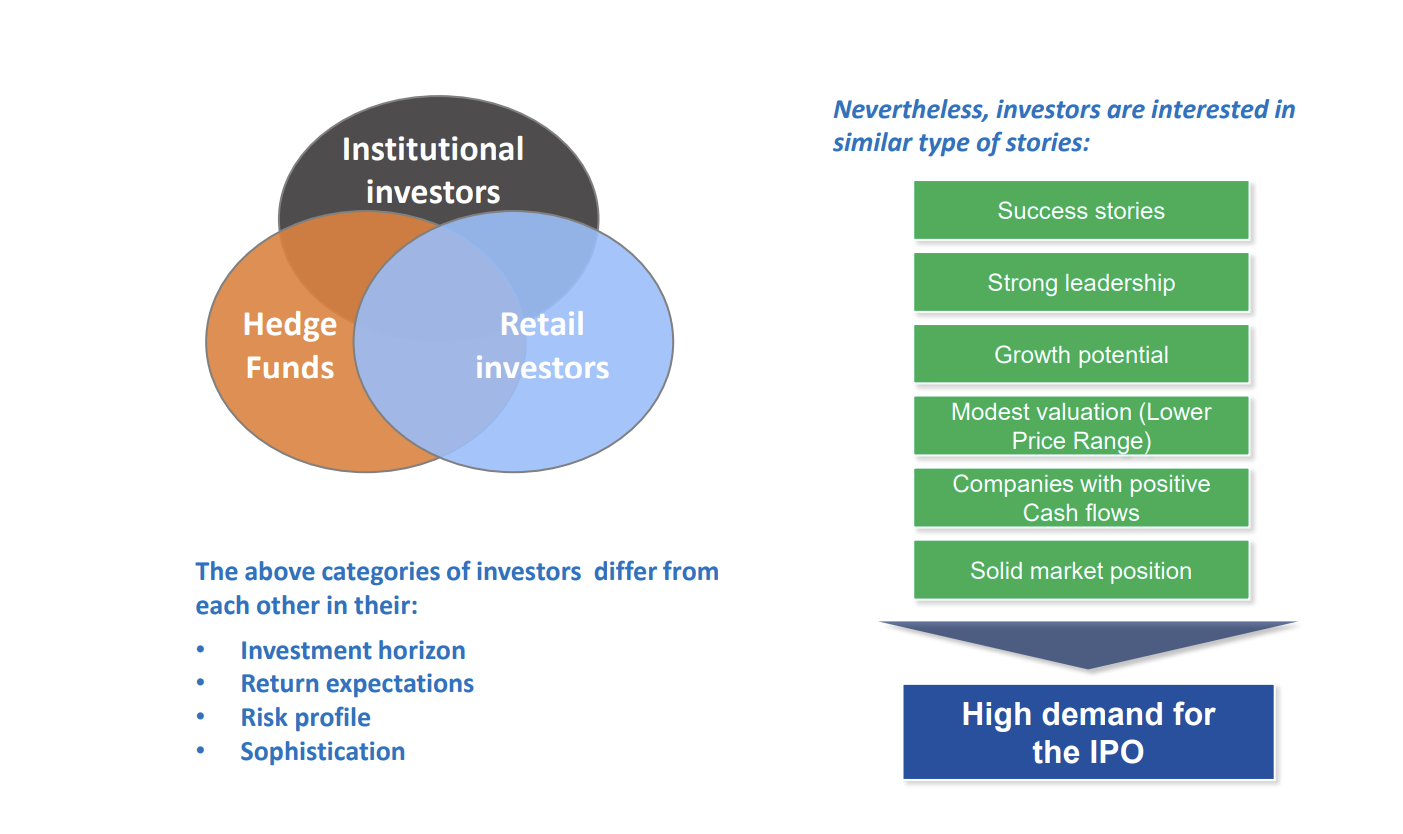
- A typical IPO pricing process lasts 4-6 months, IBs hold meetings with potential investors, showcasing the company profile and growth potential.
- DCF (Discounted cash flow) is the primary technique used to determine IPO price, the basis for this value is projections based on historical values.
- Another method is multiples valuations.
- Retail investors only mark the maximum price, while institutional investors provide a price range for the IPO
- The first task in starting an IPO is to hire advisors(Legal, tax, social), key issues are then discussed with the advisors.
- The next step is when bankers publish a pre-IPO research report. (Preliminary report).
- Next step is to create a prospectus. Which also marks the beginning of roadshows.
- Penultimate step is book building for finding the price range.
- The final step is the listing of the stock.
- A company chooses to go public when it wants to expand it financial borders, growth requires decent capital pool.
- Shares can also be used as acquisition currency in M&A transactions.
- IPOs are also an exit opportunity for the founders of the company.
- Investors in an IPO can be divided into three major groups : - Retail investors, institutional investors or Hedge funds.
- A typical IPO pricing process lasts 4-6 months, IBs hold meetings with potential investors, showcasing the company profile and growth potential.
- DCF (Discounted cash flow) is the primary technique used to determine IPO price, the basis for this value is projections based on historical values.
- Another method is multiples valuations.
- Retail investors only mark the maximum price, while institutional investors provide a price range for the IPO
- The first task in starting an IPO is to hire advisors(Legal, tax, social), key issues are then discussed with the advisors.
- The next step is when bankers publish a pre-IPO research report. (Preliminary report).
- Next step is to create a prospectus. Which also marks the beginning of roadshows.
- Penultimate step is book building for finding the price range.
- The final step is the listing of the stock.